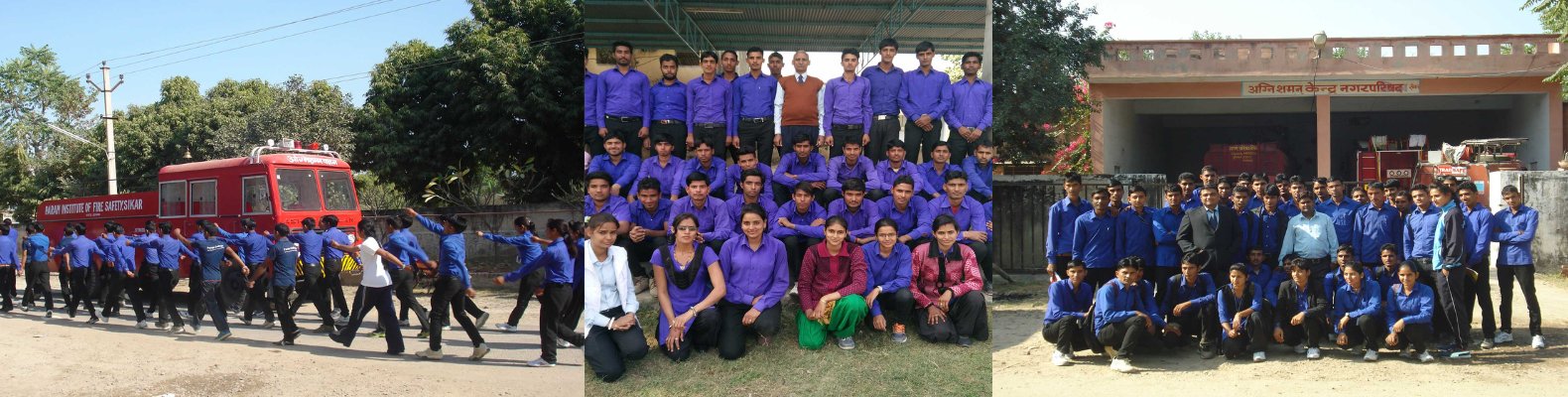
Health Sanitary Inspector
Health Sanitary Inspector (ITI/Diploma)
During the one-year duration of “Health Sanitary Inspector” trade, a candidate is trained on Professional Skill, Professional Knowledge and Employability Skill related to job role. In addition to this, a candidate is entrusted to undertake project work, extracurricular activities and on-the-job training to build up confidence. The broad components covered under Professional Skill subject are as below:
After the end of the course, the trainee will be able to make a nutritional plan for all age groups under given conditions, design a balanced diet as per the requirement under given conditions and also will be able to calculate and suggest the calorie and nutritional requirements as per the specific requirements of the person. Identify disease that occurs due to various deficiencies.
The Health Sanitary Inspector (HSI) course is a job training program that teaches students how to keep communities, hospitals, industries, and municipal bodies clean and healthy. It teaches people how to be conscious of their health, how to test water, how to handle trash, how to keep food safe, and how to keep their homes clean.
This training is very important right now since both the government and businesses are putting a lot of emphasis on cleanliness, sanitation, and preventative health care. A qualified Health Sanitary Inspector makes sure that people live in safe circumstances, that diseases are kept under control, and that trash is thrown away properly.
Health Sanitary Inspector General
The Directorate General of Training (DGT) under Ministry of Skill Development & Entrepreneurship offers a range of vocational training courses catering to the need of different sectors of economy/ Labour market. The vocational training programmes are delivered under the aegis of Directorate General of Training (DGT). Craftsman Training Scheme (CTS) with variants and Apprenticeship Training Scheme (ATS) are two pioneer schemes of DGT for strengthening vocational training.
‘Health Sanitary Inspector’ trade under CTS is one of the popular courses delivered nationwide through the network of ITIs. The course is of one year duration. It mainly consists of Domain area and Core area. The Domain area (Trade Theory & Practical) imparts professional skills and knowledge, while Core area (Employability Skill) imparts requisite core skill, knowledge and life skills. After passing out the training programme, the trainee is awarded the National Trade Certificate (NTC) by DGT which is recognized worldwide.
Candidates broadly need to demonstrate that they are able to:
- Read and interpret technical parameters/ documents, plan and organize work processes, identify necessary materials and tools.
- Perform task with due consideration to safety rules, accident prevention regulations and environmental protection stipulations.
- Apply professional skill, knowledge & employability skills while performing jobs
- Document the technical parameters related to the task undertaken.
Progression Pathways
- Can join industry as Health Sanitary Inspector and will progress further as Senior Health Sanitary Inspector, Supervisor and can rise up to the level of Manager.
- Can become Entrepreneur in the related field.
- Can join Apprenticeship programme in different types of industries leading to National Apprenticeship certificate (NAC).
- Can join Crafts Instructor Training Scheme (CITS) in the trade for becoming an instructor in ITIs.
- Can join advanced Diploma (Vocational) courses under DGT as applicable.
Faculty & Training
Students learn with the help of:
- Sanitary inspectors and public health officials
- Doctors and other health care workers (for courses on cleanliness and illness prevention)
- Experts on environmental health
- Trainers in the waste management and food safety fields
Training includes both theory and practice, such as going to the field, doing lab work, and doing surveys in the community.
Career Scope After Course
After finishing the course, students can work in:
- Health departments in the government
- Municipal corporations / Nagar Nigam as a sanitary inspector
- Public and Private Hospitals, Clinics, and Labs
- Department of Food Safety and Hygiene
- Nonprofits and programs to raise health awareness
- Departments of Health and Safety in Industry
Key Learning Areas
| Key Learning Areas | Details |
|---|---|
| Public Health & Hygiene | Basics of sanitation, disease prevention |
| Waste Management | Disposal methods, solid & liquid waste control |
| Food Safety | Food inspection, hygiene standards |
| Water Testing | Testing drinking water quality & purification |
| Environmental Health | Control of pollution & vector-borne diseases |
| Health Awareness | Educating communities on cleanliness & hygiene |
Eligibility & Course Details
| Details | Information |
|---|---|
| Eligibility | 10th or 12th Pass (Science preferred) |
| Course Duration | 1 to 2 Years (Depending on ITI/Diploma) |
| Admission Process | Merit-based / Entrance exam (in some institutes) |
| Mode of Study | Regular with practical training & field visits |
| Age Limit | 14 – 28 years (may vary by institute) |
Course Syllabus (Overview)
| Semester | Major Subjects |
|---|---|
| Semester 1 | Basics of Public Health, Sanitation, Hygiene |
| Semester 2 | Waste Management, Food Safety & Nutrition |
| Semester 3 | Water Supply & Testing, Disease Prevention |
| Semester 4 | Environmental Health, Field Training & Project Work |
Career Options After Completing HSI Course
- Government Departments' Sanitary Inspector
- Worker in Public Health
- Assistant to the Food Safety Officer
- Health and Sanitation Supervisor in hospitals and businesses
- Assistant for Environmental Health
- NGO/Coordinator of Public Health Projects
Internship & Hands-on Training
- Field training at health departments, municipal corporations, or Nagar Nigam
- Hands-on work in labs to evaluate food and water
- Training in cleanliness and waste management at the hospital
- Surveys and campaigns to raise awareness in the community
FAQs for Health Sanitary Inspector
Q1. Who are eligible for the HSI course?
Those students who have passed their 10th or 12th grade from a recognized board of education are eligible for the Health Sanitary Inspector course. Science stream candidates are preferable in certain institutes.
Q2. What is the time period of the HSI course?
Duration of HSI (Health Sanitary Inspector) course can be 1-2 years depending on the institute offering it, course structure, etc.
Q3. Can I get government jobs after doing the HSI course?
Yes, graduates of the sanitary inspector course can apply for jobs in the government sector such as health department, municipal corporation, hospital, railways, food safety department, and other public health institutions.
Q4. What is the salary in HSI course?
Freshers who complete the HSI course can earn up to ₹12,000-22,000 per month depending on job designation, location, and institution. More experienced sanitary inspectors can earn better salaries in government and private organizations.
Q5. Which further studies can I pursue after the HSI course?
One can go for diploma programs in public health courses or food safety courses, environmental health studies or even B.Sc course in Public Health & Environmental Science.

